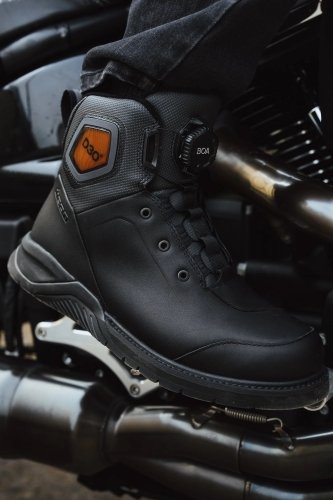
Icon Upstate CE Boots have a quiet confidence that evokes familiar country roads and early morning rides. They are made for riders who want great protection and style. These boots look less like traditional motorcycle footwear and more like a pair you would wear for a long walk through a familiar town with asphalt, cobblestones and gravel. Beneath the understated design is a serious protective construction, ready for changing weather, unpredictable road surfaces and long rides where comfort matters as much as control of the motorcycle.
Put them on and you understand right away: support without excess stiffness, protection without extra bulk or weight. They feel more like a reliable work tool than a flashy accessory — like a favorite jacket that only gets more comfortable with every season.
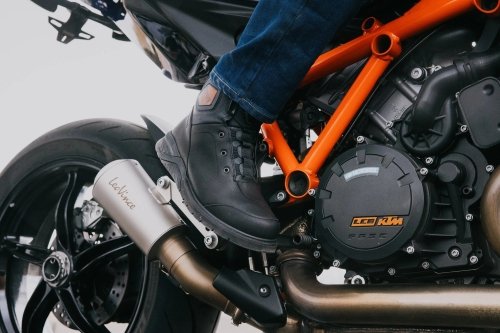
Imagine a ride through heavy city traffic, after which you point the motorcycle toward a scenic overlook on a gravel road. These boots adapt easily to different conditions: they provide the stability and support you need when the ride gets more intense, and stay comfortable when the pace slows.
FEATURES
PROTECTION
Use a mild suede/leather cleaner only on the leather parts on the outside of the boots. Safe cleaners for genuine leather can be found at most shoe repair shops or branded leather goods stores. To clean other outer parts of the boot (buckles, overlays or sole), wipe them with a cloth dampened with clean water. Please note: even after using mild, safe leather cleaners, the leather on your boots may darken. So always test each new cleaner on an inconspicuous area to avoid unpleasant surprises. Do not use solvents or other aggressive substances to clean the boots. Do not use hair dryers or other heaters to dry the boots after cleaning.
Regularly treat the outer leather parts of the boots with a quality conditioner that is safe for genuine suede/leather. Apply the genuine suede/leather conditioner only to the leather areas. Do not apply leather conditioner to the inside of the boot, zippers, hook-and-loop surfaces or sole. Safe cleaners for genuine leather/suede can be found at most shoe repair shops or branded leather goods stores.
Store your boots in a dry, well-ventilated place, away from direct sunlight and other sources of heat. Make sure nothing can crush, crease or damage them, and do not place heavy objects on them. When storing the boots, make sure their weight does not rest on a few separate points but is distributed as evenly as possible. If the boots are damp after use, dry them in a ventilated room at room temperature before storing them; do not use hair dryers or other heaters to speed up the process.
When transporting the boots, do not leave them in a closed car for long periods, and make sure they are not exposed to excessively high or low temperatures. Make sure they cannot be crushed, hit, creased or otherwise mechanically damaged, and that no heavy objects are placed on them during transport.

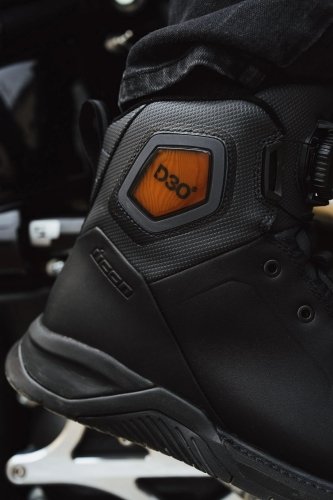
D3O® is the number one choice for motorcycle body armor and protective gear that delivers outstanding impact protection, comfort and flexibility. From MotoGP, to off-road and the street, our innovative range of CE Level 1 and Level 2 certified products are trusted and sold worldwide by leading motorcycle brands.
Motorcycle armor works by absorbing the shock from an impact. Rather than the impact striking your body with full force, motorcycle armor helps take the brunt of the impact and dissipate the force to reduce its severity. The impact protection material found in motorcycle armor is what makes this possible, and the materials used in and around the armor (such as leather in a jacket, or woven kevlar in motorcycle pants) help to resist abrasion.
D3O® motorcycle armor offers the most advanced impact protection available on the market. Based on non-Newtonian principles, D3O® materials are soft and flexible in their resting state, but stiffen under an impact to disperse the energy of the force across the surface area of the product. D3O® armor is durable and designed to withstand multiple impacts, only needing to be replaced when showing wear and tear. This is in contrast to other armor which can flatten out over time, quickly losing its ability to protect effectively.

The design of motorcycle armor is also key to ensure it gives maximum levels of protection and comfort. Each piece of D3O® armor is designed to fit specific parts of the body comfortably, including the back, chest and limbs, such as knees and elbows. This gives these areas optimum coverage and reduces the likelihood of injury.
When looking at your D3O® impact protection or the label in your motorcycle armor, you're likely to see EN (European Norm) numbers. EN standards are used to help demonstrate that a product meets the requirements of the PPE Regulation (EU) 2016/425 or PPE Regulation (2016/425) as brought into UK Law and amended.

EN1621 relates specifically to motorcycle armor. EN1621-1:2012 relates to limb protection, EN1621-2:2014 to back protection, and EN1621-3:2018 to chest protection. All of these can be tested to meet Level 1 or Level 2 protection. Level 1 offers a good level of impact protection, and Level 2 meets the criteria for racing, and can therefore withstand higher force impacts.
EN13594:2015 is specific to motorcycle glove protection. To pass, the product must meet the following criteria: Innocuousness, ergonomic requirements, sizing and cuff length, restraint, tear strength, seam strength, impact abrasion resistance, cut resistance, and impact protection of knuckles.
EN13634:2015 applies to motorcycle footwear. The criteria that need to be met include: protection, ergonomic characteristics, innocuousness, mechanical properties, marking and information for users.
Whole garment testing is reviewed against EN 17092:2020. This is separate from the EN standards indicated above. While impact protection is necessary to meet EN 17092:2020, the armor also needs to be tested on its own to ensure it's fit for purpose and meets Level 1 or Level 2 requirements.
EN17092 is tested to 5 levels of criteria. The testing looks at the different zones on the body and how well the armor protects those areas under force. Garments certified to EN17092 and featuring D3O® impact protection are therefore some of the safest and most well-tested motorcycle armor items available on the market. You can be guaranteed regulated, independent testing when looking for these EN standards.
The AAA-A garment classification is important to check and understand so you make sure you're getting the correct level of protection.

AAA-A classes are certified in accordance with EN 17092:2020. The materials are tested under lab conditions to assess how much speed and force they can withstand before tearing — this is the measure of abrasion resistance. This then allows the AAA-A classification to be assigned.
The main difference between the classes is the abrasion, seam strength and cut resistance of the garment. The more you go towards AAA, the better the materials and construction.
D3O works with many partner brands to provide market-leading impact protection armor in motorcycle clothing.
D3O® motorcycle impact protection is offered in two levels, Level 1 and Level 2. Choose the right level of protection depending on the type of riding you're doing, as well as taking into consideration the technical features you prefer to have while riding.

D3O offers a range of CE/UKCA armor to protect your chest, back and limbs whilst riding to minimize the likelihood of injury from riding accidents.

BOA appeared in the Rocky Mountains in 2001 with a revolutionary fit system for snowboard boots. Founder Gary Hammerslag moved to Steamboat, Colorado, from California in the mid-90s after successfully selling his previous company, which created innovative catheter solutions that increased the speed and efficiency of angioplasty procedures.
While snowboarding, Gary figured out how to greatly improve the fit and performance of snowboard boot lacing systems by applying elements of his medical device expertise.

After numerous prototypes and tests, the modern BOA Fit system was born, with micro-adjustment and a precise fit, which eventually helped revolutionize various industries, from snowboarding to medical orthopedic joint braces.

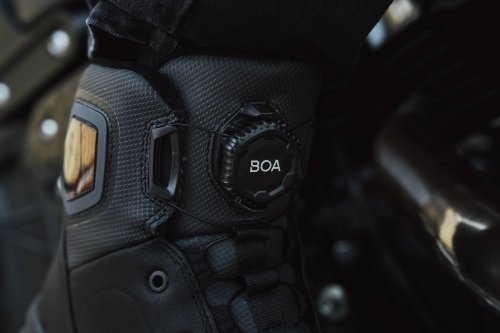
The BOA Fit system is a revolutionary, award-winning patented quick lacing system integrated into products of leading brands worldwide. BOA’s innovative solutions are designed to deliver a micro-adjustable, precise fit built to perform in the toughest conditions. Whether you are snowboarding in Colorado, skiing in Austria, riding the Tour de France or an ultra trial, playing golf, working in extreme outdoor conditions, racing a motorcycle or setting off on a motorcycle trip — BOA helps people perform at their limit.
BOA® conducts more than 400 hours of performance testing of its systems with elite athletes every year, collecting millions of data points from various industries that scientifically prove the impact of footwear fit on performance.

In riding gear, BOA has also made it possible to significantly improve the usability, comfort and protection of motorcycle boots.

Motorcycle footwear is much stiffer than everyday footwear, so it is harder to take off and put on. BOA lets you quickly and easily loosen the tongue and instantly tighten the boot on your foot.
A snug, even fit of the boot on the foot provides better support. This not only increases safety in a crash but also reduces strain on the joint during long rides. Conventional laces have tension zones that squeeze the joint in some foot positions.
The BOA Fit system has undergone years of testing with top-level athletes in the harshest conditions.
The lace is a steel cable in a nylon braid, which is stronger than any textile lace.
Low-friction plastic guides ensure smooth cable sliding and therefore even tension along the entire length.
The dial, made of strong ABS plastic, withstands heavy impacts and prolonged friction while remaining functional.
All system components are replaceable and sold separately.
The American riding gear manufacturer ICON was one of the first (and perhaps the first) to use BOA on its motorcycle boots. The system immediately proved itself, so now most ICON footwear is equipped with BOA Fit.
When choosing motorcycle footwear size remotely, we recommend going by the insole length and comparing it with your own footwear, preferably stiff boots with a blunt toe. We don’t recommend comparing with soft sneakers, as they may be tight or slightly small yet feel comfortable thanks to the stretchy mesh upper. Motorcycle footwear is stiff and doesn’t stretch like sneakers.
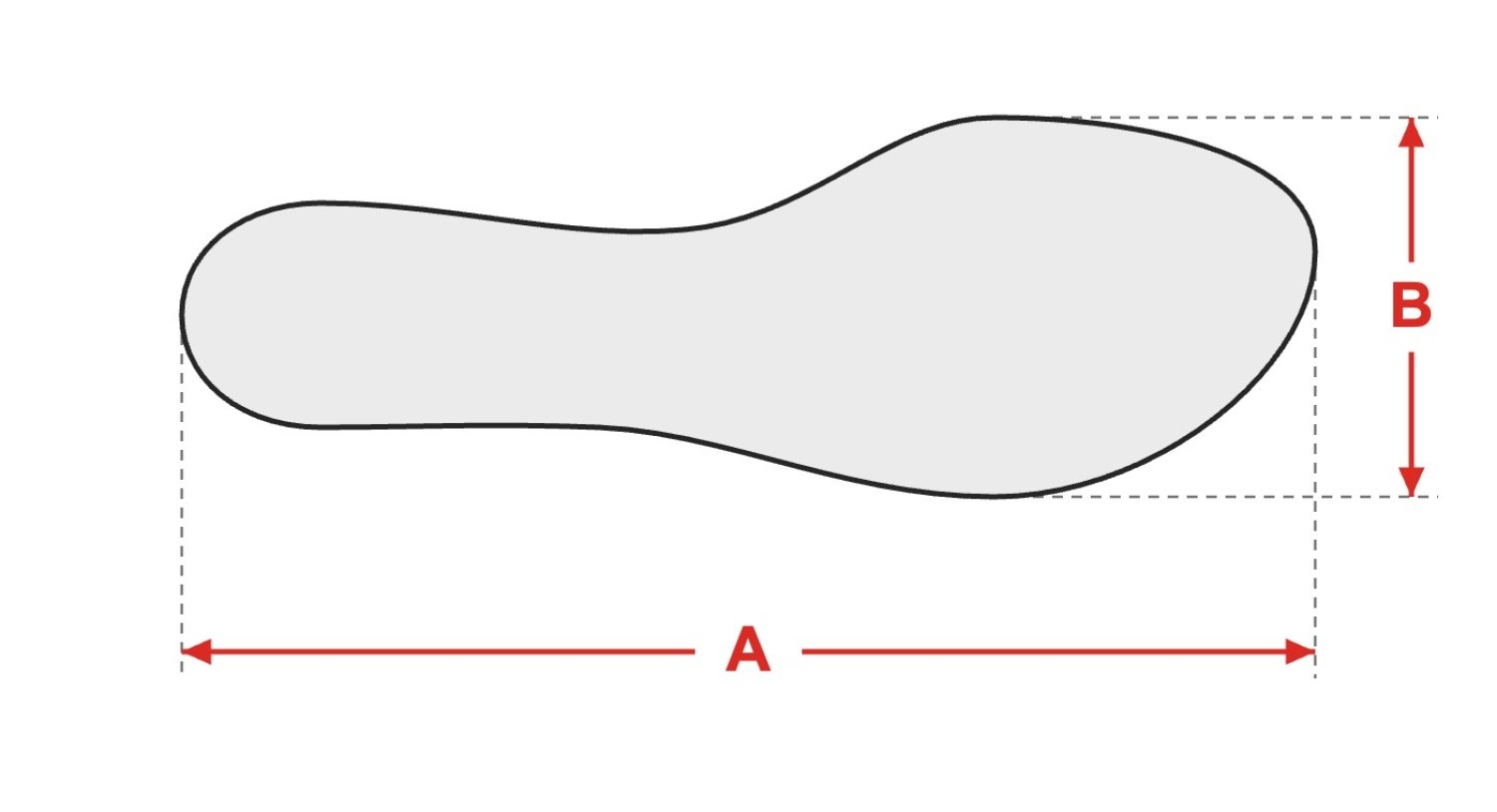
The table below shows the overall insole dimensions in millimeters, which we measure ourselves with a tape measure. [A] is the insole length, [B] is the maximum width.
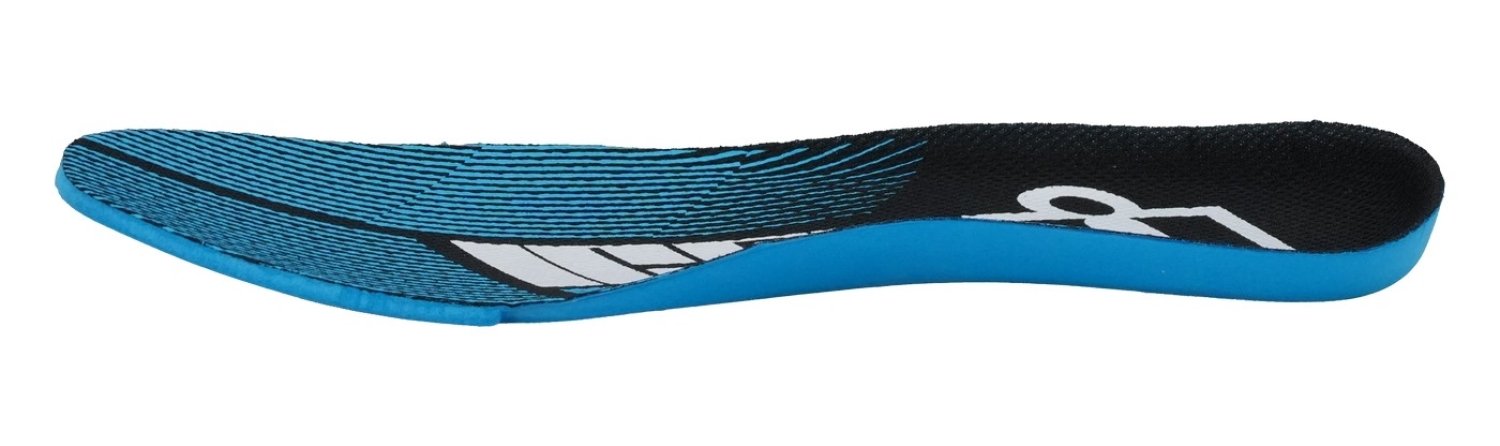
This is the Icon Upstate CE insole from the side: the heel cup is curved and raised, so the length your foot actually rests on is slightly shorter than the overall length [A].
On our forum we share experience of choosing motorcycle footwear sizes remotely.
Scroll the table sideways to see all sizes.
| US size | 7 | 8 | 8.5 | 9 | 9.5 | 10 | 10.5 | 11 | 11.5 | 12 | 13 | 14 |
|---|---|---|---|---|---|---|---|---|---|---|---|---|
| EC size | 39 | 41 | 42 | 43 | 43,5 | 44 | 44,5 | 45 | 45,5 | 46 | 47 | 48,5 |
| A, mm | 260 | 270 | 273 | 276 | 281 | 285 | 290 | 293 | 296 | 302 | — | 318 |
| B, mm | 90 | 91 | 93 | 94 | 95 | 97 | 98 | 98 | 100 | 101 | — | 104 |
Icon® motorcycle boots are considered personal protective equipment (PPE) under Regulation (EU) 2016/425. All Icon protective footwear is Category 1 or 2 PPE, so the CE marking may be applied to it only after obtaining a CE certificate of conformity and subsequent certification by an EU notified body. The CE marking on protective footwear indicates compliance with the essential health and safety requirements of Regulation (EU) 2016/425.
All Icon motorcycle boots have passed EU type-examination testing at the notified body Ricotest Srl 0498 for compliance with Regulation (EU) 2016/425. In addition, they have been inspected and tested for compliance with the technical standard EN 13634:2017 “Protective footwear for motorcycle riders — requirements and test methods”.
Icon motorcycle boots may be used only for riding road motorcycles. The boots are designed to provide limited protection only in certain circumstances. The boots are intended for use only as motorcycle boots. The boots are intended for use in combination with other protective equipment. Using the boots in addition to any other PPE or motorcycle riding gear does not mean that such PPE or riding gear complies with CE standards. Motorcycling is dangerous, so using the boots cannot prevent injury or death. For additional protection when riding a motorcycle, Icon® strongly recommends always using several mutually compatible PPE items, including a certified motorcycle helmet, a motorcycle jacket with shoulder and elbow impact protection, certified back protection, motorcycle pants with certified knee, shin and hip impact protectors, motorcycle gloves and certified motorcycle boots.
Below are the CE markings on the boots in accordance with Regulation (EU) 2016/425 and EN 13634:2017.
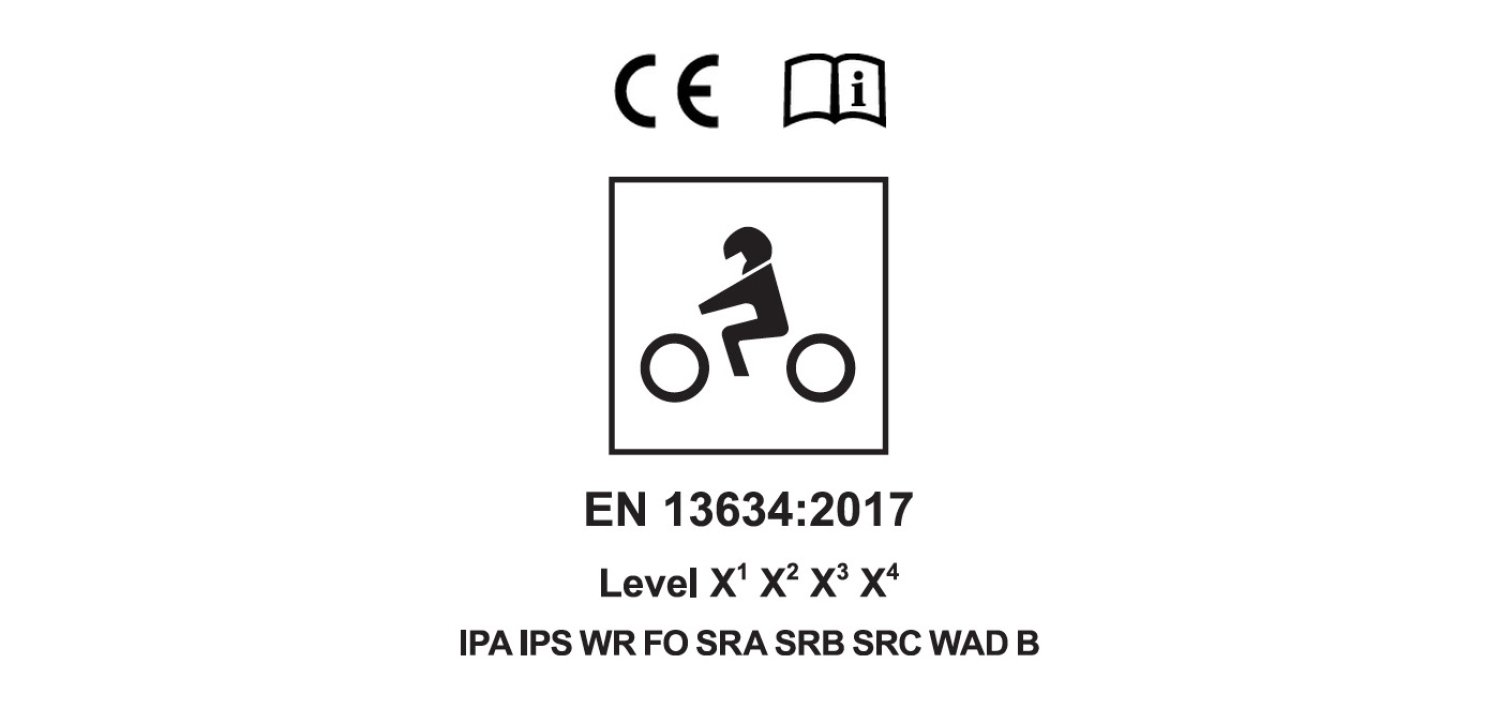
CE
The CE marking means that this protective footwear complies with the applicable requirements of Regulation (EU) 2016/425.
Open book pictogram
Pictogram indicating that a user manual (information sheet) is supplied with this product.
Motorcyclist pictogram
Special symbol indicating that the protective footwear is intended for motorcycle riding only.
EN 13634
Technical standard
EN 13634:2017 Level X1 X2 X3 X4 IPA IPS WR FO SRA SRB SRC WAD B
Performance level of the protective footwear according to EN 13634:2017.
X1 is the height of the upper: level 1 or level 2.
X2 is the abrasion resistance of the upper: level 1 or level 2.
X3 is the cut resistance of the upper: level 1 or level 2.
X4 is the transverse rigidity of the footwear: level 1 or level 2.
IPA: the footwear meets the additional requirements for ankle impact protection.
IPS: the footwear meets the additional requirements for shin impact protection.
WR: the footwear meets the additional requirements for resistance to water penetration.
FO: the footwear meets the additional requirements for resistance to fuel and oil.
SRA, SRB or SRC: the footwear meets the additional requirements for slip resistance.
WAD: the insoles meet the requirements for water absorption and desorption.
B: the footwear meets the requirements for water vapour permeability of the upper.
Choosing the right size:
Men’s boot sizes
| EU | 39 | 41 | 42 | 43 | 43.5 | 44 | 44.5 | 45 | 45.5 | 46 | 47 | 48.5 |
|---|---|---|---|---|---|---|---|---|---|---|---|---|
| US | 7 | 8 | 8.5 | 9 | 9.5 | 10 | 10.5 | 11 | 11.5 | 12 | 13 | 14 |
| UK | 6.5 | 7.5 | 8 | 8.5 | 9 | 9.5 | 10 | 10.5 | 11 | 11.5 | 12.5 | 13.5 |
For maximum protection, PPE must be worn so that it securely covers vulnerable areas of the body. If the PPE design includes protective features, it must fit the user correctly for the PPE to be positioned properly. PPE must be fitted with special adjusters for a precise fit to the body.
The fit of protective footwear on the foot is very important. The fit of different types of protective footwear varies depending on design and construction. Wear only protective footwear of the right size. Do not use protective footwear that does not fit your foot properly. Make sure the protective footwear fits snugly but not too tightly. Make sure heel lift is minimal. Make sure the toe does not pinch.
If the Icon boots are equipped with the BOA® lacing system.
Tightening the laces:
Press the system dial on the boot tongue and push it down toward the foot to unlock the lacing system. Turn the dial clockwise to tighten the lacing system to the desired level.
Loosening the laces:
Pull the system dial toward you and up away from the foot to release the lacing tension. To put the boots on, loosen the laces and insert your foot. Push your foot all the way down into the boot. Make sure the boot fits comfortably. The boot should fit snugly but not too tightly. The length of your foot should match the length of the boot; it should not be much shorter or longer. Tighten the laces to achieve the desired fit. The footwear must not impair blood circulation in the foot. If the boot is too tight, you can loosen the lacing system and retighten it to achieve the right fit. Make sure the boot fits snugly but not too tightly, does not impair circulation and does not restrict freedom of movement.
Make sure the boots do not interfere with operating the motorcycle.
For maximum protection and safety, protective footwear must not cause discomfort or restrict the rider’s freedom of movement, or prevent access to and use of the motorcycle controls in the normal riding position. If you cannot find comfortable protective footwear of this type, use another type of CE-certified protective footwear.
BEFORE EACH USE
Make sure the sole is in good condition and securely attached to the boot. Make sure the linings are not torn. Check the upper of the boot for cuts, cracks and scuffs. Make sure the BOA® lacing system works properly. Protective footwear that is not securely fastened cannot provide protection. If the protective footwear or any of its parts are worn, replace the footwear immediately.
IN THE EVENT OF AN IMPACT OR CRASH
In the event of an impact or crash, key parts of the protective footwear may be damaged, and the footwear may no longer provide limited protection against the impacts described in the “Prohibitions and limitations of use”, “Performance” and “Protection limitations” sections. Damage may not be visible on simple visual inspection. In the event of an impact or crash, the boots should be replaced.
TWO-YEAR RULE
As a rule, lightweight PPE such as motorcycle boots should be replaced every two years, even if there is no visible damage. Damage may not be visible on simple visual inspection.
Icon motorcycle boots have passed EU testing for compliance with Regulation 2016/425. In addition, they have been inspected and tested for compliance with the appropriate technical standard.
The European standard EN 13634:2017 provides for two levels of protection depending on the protective features. The level of risk or danger a rider may face is closely related to their riding style and the type of crash. According to EN 13634:2017, protection level 1 is considered the minimum level required for effective protection in a crash. Footwear of this level provides an optimal level of comfort for any riding style. If the rider’s riding style or sport involves increased risk, it is recommended to use level 2 protective equipment with a higher level of protection. However, stronger protection means heavier gear and less comfort, so this level is not suitable for every rider.
Type tests of motorcycle boots under EN 13634:2017 are shown in Table 2 (consisting of three parts):
Table 2, part 1. All footwear: height of the upper (EN 13634:2017, clause 4.2.1; mm; see Fig. 1)
| Size (EU) | Level 1: H2 ≥ | Level 1: H1 ≥ | Level 2: H2 ≥ | Level 2: H1 ≥ |
|---|---|---|---|---|
| 36 and below | 103 | 64 | 162 | 113 |
| 37–38 | 105 | 66 | 165 | 115 |
| 39–40 | 109 | 68 | 172 | 119 |
| 41–42 | 113 | 70 | 178 | 123 |
| 43–44 | 117 | 72 | 185 | 127 |
| 45 and above | 121 | 73 | 192 | 131 |
H1 and H2 are defined in Fig. 1.
Table 2, part 2. Upper
| Test | Standard | Unit | Requirement |
|---|---|---|---|
| Abrasion resistance | EN 13634:2017, clause 4.4.4 | s | Area A (Achilles tendon and instep): level 1 ≥ 1.5 s, level 2 ≥ 2.5 s. Area B (rest of the upper): level 1 ≥ 5 s, level 2 ≥ 12 s. The test results for the upper are classified on the basis of the lowest result obtained in area A or B. Areas A and B are defined in Fig. 2 and Table 3. |
| Cut resistance | EN 13634:2017, clause 5.4.4 | mm | Area A (Achilles tendon and instep): level 1 maximum knife penetration ≤ 25 mm, level 2 maximum knife penetration ≤ 25 mm. Area B (rest of the upper): level 1 maximum knife penetration ≤ 25 mm, level 2 maximum knife penetration ≤ 15 mm. The test results for the upper are classified on the basis of the lowest result obtained in area A or B. Areas A and B are defined in Fig. 2 and Table 3. |
Table 2, part 3. Sole and whole boot
| Test | Standard | Unit | Requirement |
|---|---|---|---|
| Sole: transverse rigidity of the footwear | EN 13634:2017, clause 4.8 | kN | Level 1: ≥ 1.0 kN Level 2: ≥ 1.5 kN |
| Boot: resistance to water penetration | EN 13634:2017, clause 5.2 | Must comply with EN ISO 20345:2011, clause 6.2.5 | |
| Boot: slip resistance of the sole | EN 13634:2017, clause 5.4 | Surface: ceramic tile. Lubricant: SLS. A) heel mode (7°) ≥ 0.28 B) flat mode ≥ 0.32 |
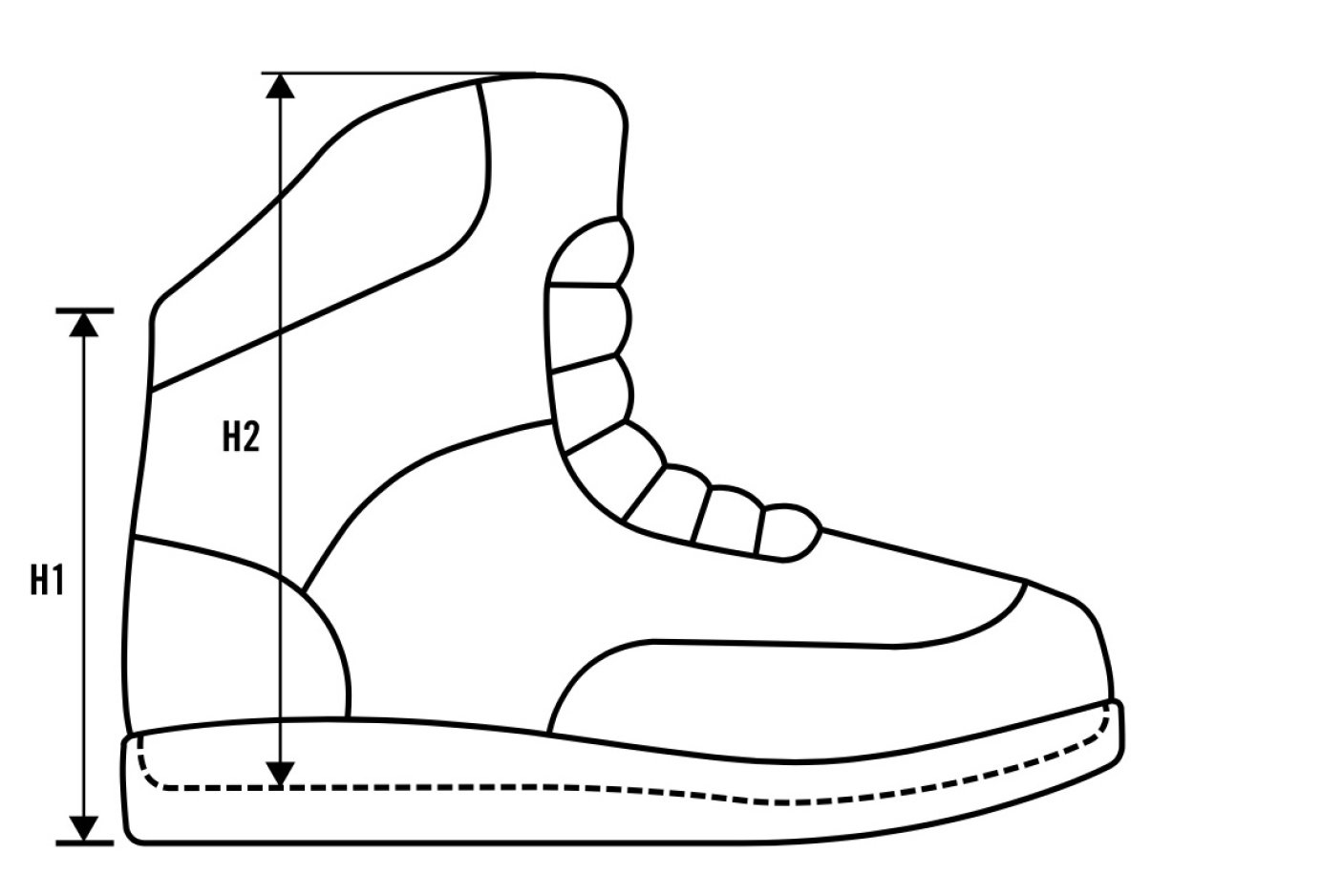

Fig. 2. Key
| Designation | In the figure |
|---|---|
| Zone 1, shin area | 1 |
| Zone 2, ankle area | 2 |
| Zones F and G | See Table 3 |
| Area A | Shaded grey |
| Area B | Not shaded |
Table 3. Measurements for the areas shown in Fig. 2
| Size (EU) | Size (UK) | F, minimum (mm) | G, maximum (mm) |
|---|---|---|---|
| 38 and below | 5 and below | 40 | 120 |
| 39–42 | 5.5–8 | 50 | 125 |
| 43 and above | 8.5 and above | 55 | 130 |
The lower edge of Zone 2 is used to define the lower limit of measurements F and G. Zone 2 is located at the central point X above the natural centre of the ankle, according to the position of the foot in the boot.
GENERAL INFORMATION ON USE:
Icon motorcycle boots protect the user from external conditions without impairing their ability to operate the motorcycle’s foot controls. The boots were designed with the need to ensure safety while preserving freedom of movement in mind. Motorcycle boots are considered PPE because they are designed to provide limited protection of the foot and ankle in the event of a crash or fall from a motorcycle.
Additional dangers in road accidents involving a motorcycle may come from impacts with the motorcycle and collisions with other vehicles and objects on the road.
The likelihood of serious injury increases if the leg becomes trapped under the motorcycle while sliding. Motorcycle boots do not prevent injuries caused by heavy impacts, severe bending, twisting, torsion or crushing from hitting an object, injuries caused by very sudden movements, or extensive penetrating injuries. The forces used in testing cannot be directly compared with the forces riders are exposed to in real crashes, so products that meet EN 13634:2017 can only reduce the severity of some injuries.
No protective footwear can provide complete protection against all injuries. The principle is to create a product that helps reduce the risk of injury to the area this PPE was designed to protect.
MISUSE THAT IMPAIRS BOOT PERFORMANCE:
To provide protection, the boots must be worn. Misuse of the boots can seriously impair their effectiveness and performance. For the boots to retain their original protective properties, use them only for the purposes described in the “Prohibitions and limitations of use” section of this user manual. Do not modify any boot components. Never bend or twist the boots excessively, as they are not designed for this. Do not paint the boots or use dyes of any kind.
ENVIRONMENTAL CONDITIONS THAT IMPAIR BOOT PERFORMANCE:
Contamination with foreign substances and/or improper care can significantly impair the effectiveness and performance of the boots. Do not expose the boots to extremely intense direct sunlight or extremely high humidity. Do not expose the boots to very high or low temperatures, such as in a closed car or when stored outdoors.
RELEASE OF THE MANUFACTURER FROM LIABILITY BY THE PRODUCT OWNER:
NO PERSONAL PROTECTIVE EQUIPMENT CAN PROVIDE PROTECTION AGAINST ALL TYPES OF IMPACTS. NO PERSONAL PROTECTIVE EQUIPMENT CAN PROVIDE COMPLETE PROTECTION AGAINST ALL TYPES OF INJURIES. MOTORCYCLING IS DANGEROUS, AND USING THIS GEAR CANNOT PREVENT INJURY OR DEATH. BY USING THIS GEAR, THE USER ASSUMES ALL RISKS ASSOCIATED WITH THIS ACTIVITY THAT MAY RESULT IN INJURY OR DEATH. THE USER HEREBY WAIVES ALL CLAIMS AND LAWSUITS AGAINST ICON® (A DIVISION OF LEMANS CORPORATION) AND LEMANS CORPORATION IN THE EVENT OF DEATH OR INJURY RESULTING FROM THE USE OF ICON® PRODUCTS.