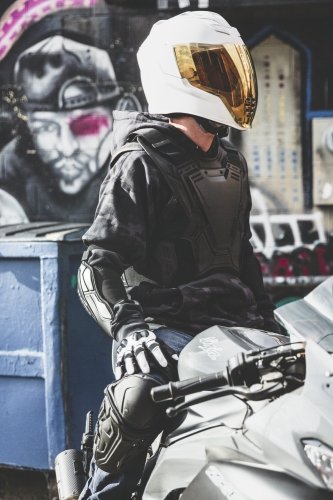
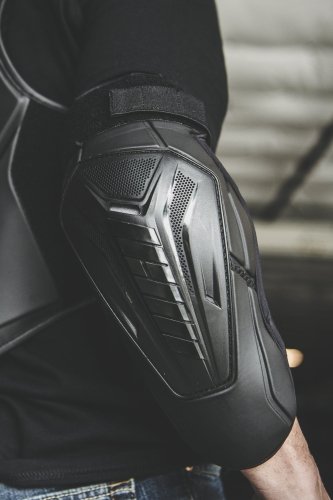
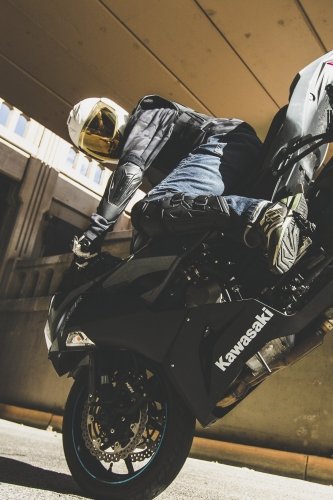
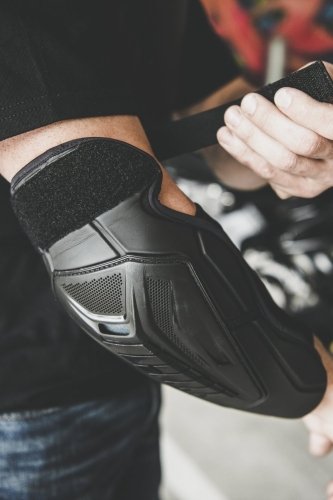
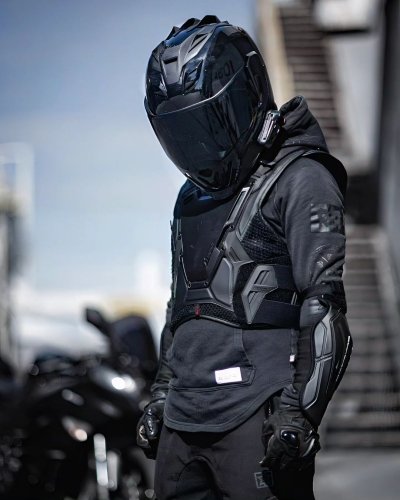
Ride long enough and you will inevitably meet the asphalt. For those moments when life throws you onto the asphalt, we offer the Field Armor 3™ Elbow protection. Ventilated bio-foam and a mesh chassis are combined with an articulated molded plastic slider with ventilation channels for maximum airflow. The elbow guards are so comfortable that it is easy to forget you are wearing them. The low-profile design fits under most jackets, and an elastic adjustment strap helps secure the guard on the arm. D3O® protection effectively absorbs impact energy and is the best in the industry. If you push into the red, gear up with Icon Field Armor 3™ protection.
FIT
MATERIALS
CERTIFICATION
FEATURES
ICON® motorcycle protection is tough and designed to withstand harsh contact with asphalt, but no protection can survive every possible motorcycle crash. If you crash in Icon protection, carefully inspect it for signs of structural damage (heavily abraded areas, holes, damaged seams, etc.). If there is damage, or if you are not sure whether the damage is structural, the protection must be replaced. Most Icon protection uses a coating over the textile base that reinforces the overall fabric matrix. Improper cleaning can compromise the integrity of this coating, leading to breakdown of the base material and reduced protective properties.
Do not expose the protection to excessive sunlight and ultraviolet radiation. This is most important when storing it. Always store the protection in a dark, well-ventilated place. It is best to store it on a regular wardrobe hanger with wide, padded shoulders. Do not wrap the protection in plastic or other non-porous materials, as this may discolor the fabric or plastic. Finally, avoid exposing the protection (or any other riding gear) to gasoline fumes or any other aggressive chemicals. These fumes harm the structure of nylon and polyester fabrics, reducing their inherent protective properties.
Hand wash the textile areas of the protection in warm water with a mild liquid detergent. Hand washing keeps unnecessary friction on the garment to a minimum. A soft-bristle toothbrush is great for removing the remains of small flying insects that hit the protection and road dust. After washing, rinse the protection in clean water until all detergent is removed. DO NOT use oxygen-based detergents, bleach, fabric softeners, conditioners or dry cleaning products. Using these products can damage the garment!
DO NOT use a tumble dryer. Tumble drying will damage both the garment and possibly the dryer itself. The only recommended drying method is to take the garment out of the water, let the water drain, gently squeeze it by hand without wringing and place it on a drying rack. While drying, do not expose the protection to direct sunlight or use a hair dryer or heaters to speed up the process. DO NOT iron any part of the garment.

D3O® is the number one choice for motorcycle body armor and protective gear that delivers outstanding impact protection, comfort and flexibility. From MotoGP, to off-road and the street, our innovative range of CE Level 1 and Level 2 certified products are trusted and sold worldwide by leading motorcycle brands.
Motorcycle armor works by absorbing the shock from an impact. Rather than the impact striking your body with full force, motorcycle armor helps take the brunt of the impact and dissipate the force to reduce its severity. The impact protection material found in motorcycle armor is what makes this possible, and the materials used in and around the armor (such as leather in a jacket, or woven kevlar in motorcycle pants) help to resist abrasion.
D3O® motorcycle armor offers the most advanced impact protection available on the market. Based on non-Newtonian principles, D3O® materials are soft and flexible in their resting state, but stiffen under an impact to disperse the energy of the force across the surface area of the product. D3O® armor is durable and designed to withstand multiple impacts, only needing to be replaced when showing wear and tear. This is in contrast to other armor which can flatten out over time, quickly losing its ability to protect effectively.

The design of motorcycle armor is also key to ensure it gives maximum levels of protection and comfort. Each piece of D3O® armor is designed to fit specific parts of the body comfortably, including the back, chest and limbs, such as knees and elbows. This gives these areas optimum coverage and reduces the likelihood of injury.
When looking at your D3O® impact protection or the label in your motorcycle armor, you're likely to see EN (European Norm) numbers. EN standards are used to help demonstrate that a product meets the requirements of the PPE Regulation (EU) 2016/425 or PPE Regulation (2016/425) as brought into UK Law and amended.

EN1621 relates specifically to motorcycle armor. EN1621-1:2012 relates to limb protection, EN1621-2:2014 to back protection, and EN1621-3:2018 to chest protection. All of these can be tested to meet Level 1 or Level 2 protection. Level 1 offers a good level of impact protection, and Level 2 meets the criteria for racing, and can therefore withstand higher force impacts.
EN13594:2015 is specific to motorcycle glove protection. To pass, the product must meet the following criteria: Innocuousness, ergonomic requirements, sizing and cuff length, restraint, tear strength, seam strength, impact abrasion resistance, cut resistance, and impact protection of knuckles.
EN13634:2015 applies to motorcycle footwear. The criteria that need to be met include: protection, ergonomic characteristics, innocuousness, mechanical properties, marking and information for users.
Whole garment testing is reviewed against EN 17092:2020. This is separate from the EN standards indicated above. While impact protection is necessary to meet EN 17092:2020, the armor also needs to be tested on its own to ensure it's fit for purpose and meets Level 1 or Level 2 requirements.
EN17092 is tested to 5 levels of criteria. The testing looks at the different zones on the body and how well the armor protects those areas under force. Garments certified to EN17092 and featuring D3O® impact protection are therefore some of the safest and most well-tested motorcycle armor items available on the market. You can be guaranteed regulated, independent testing when looking for these EN standards.
The AAA-A garment classification is important to check and understand so you make sure you're getting the correct level of protection.

AAA-A classes are certified in accordance with EN 17092:2020. The materials are tested under lab conditions to assess how much speed and force they can withstand before tearing — this is the measure of abrasion resistance. This then allows the AAA-A classification to be assigned.
The main difference between the classes is the abrasion, seam strength and cut resistance of the garment. The more you go towards AAA, the better the materials and construction.
D3O works with many partner brands to provide market-leading impact protection armor in motorcycle clothing.
D3O® motorcycle impact protection is offered in two levels, Level 1 and Level 2. Choose the right level of protection depending on the type of riding you're doing, as well as taking into consideration the technical features you prefer to have while riding.

D3O offers a range of CE/UKCA armor to protect your chest, back and limbs whilst riding to minimize the likelihood of injury from riding accidents.