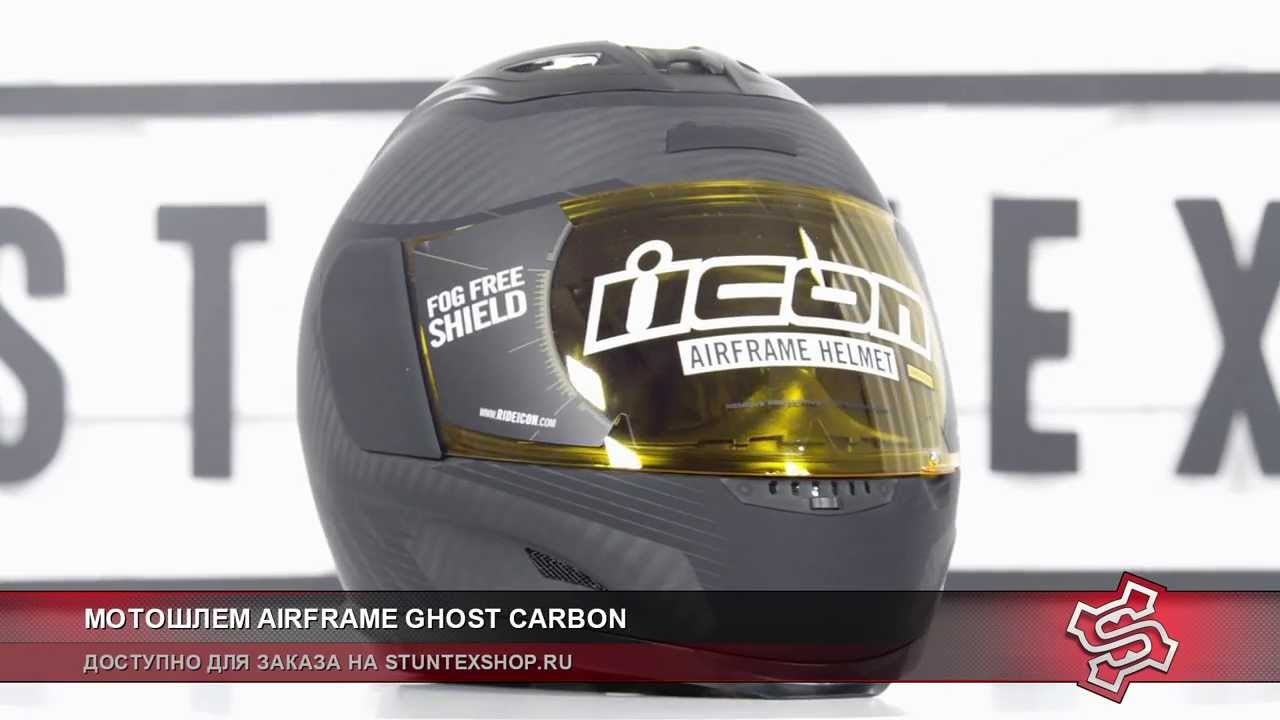
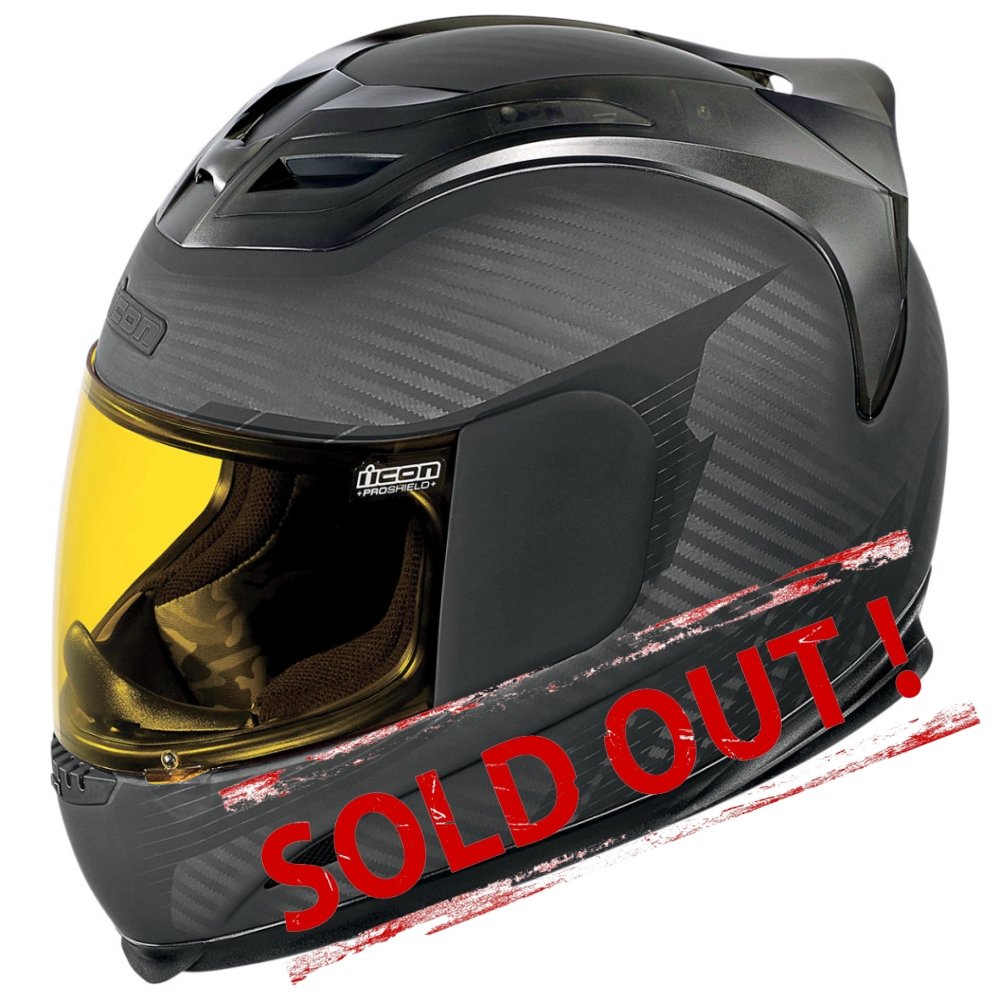
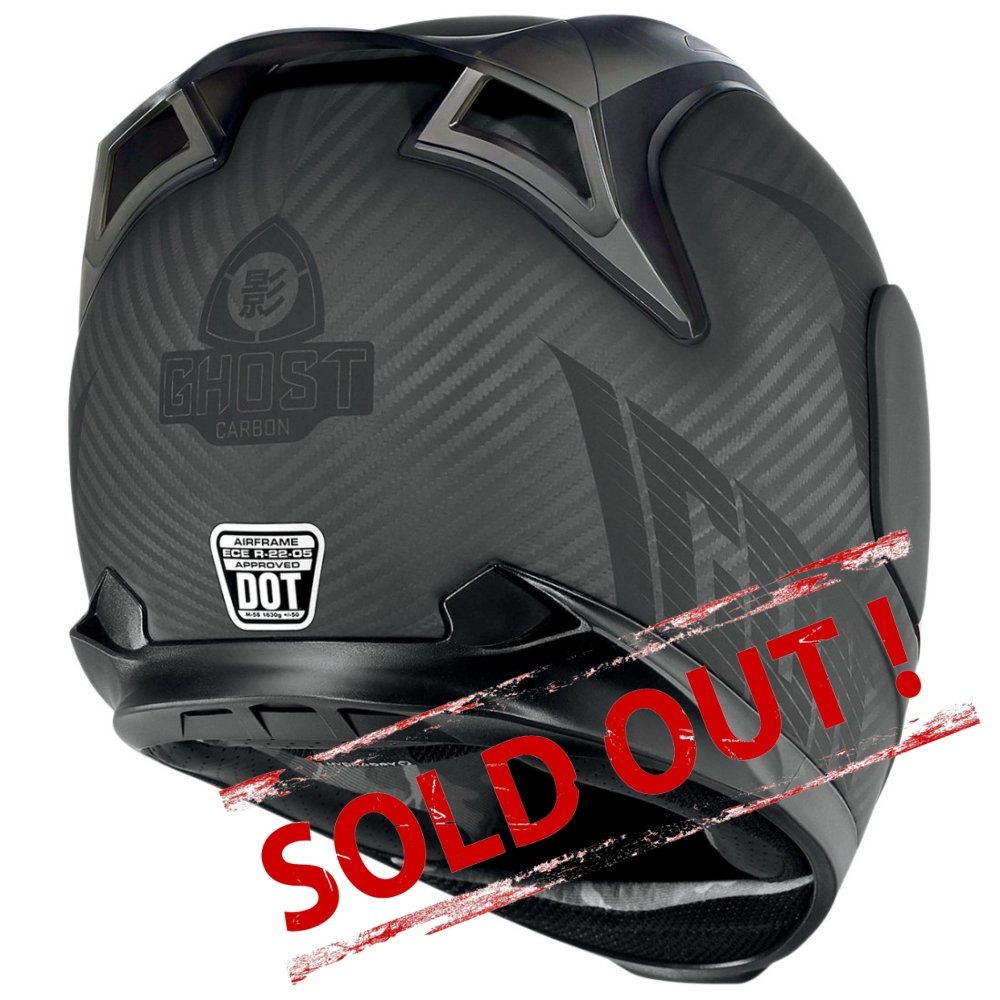
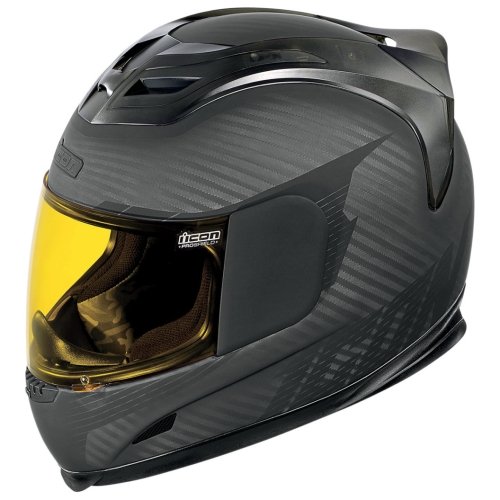
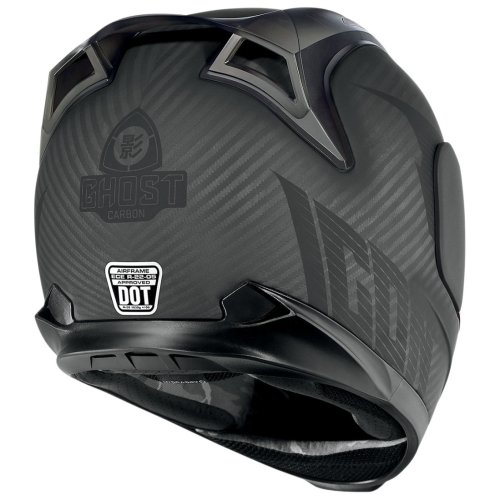
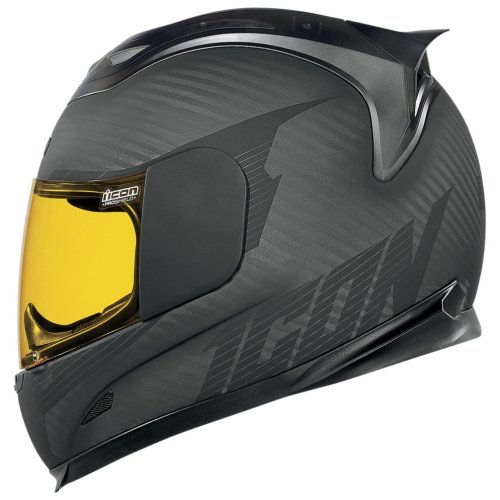
Обретение тактического преимущества требует владения оборудованием и опытом самого высокого уровня. Встречайте Ghost Carbon Airframe. Наша традиционная основа Airframe, уложенная вручную скорлупа из карбоновых волокон, транслюцентное исполнение вентиляционных выходов, визор Optics со стильной желтой тонировкой — увенчивается эксклюзивным покрытием Rubatone. Мотошлем Ghost Carbon готов принять участие в розыгрыше любого сценария, и можно не сомневаться: с его участием любой сценарий станет выигрышным.
This manual contains instructions on choosing a suitable motorcycle helmet, and on wearing, caring for and replacing it in good time. Failure to follow the instructions given here may increase the risk of serious injury or death in a crash.
For maximum protection, always follow these instructions. Always wear a helmet when riding a motorcycle. Handle the helmet carefully to avoid accidental damage. Follow safety rules while riding. Don’t take risks just because you are wearing a helmet.
No personal protective equipment can protect against all types of injuries in a crash or fall from a motorcycle. No riding gear can provide complete protection against impacts or abrasion in a crash or fall from a motorcycle. Motorcycling is inherently dangerous, and using this helmet cannot prevent injury or death. Even at low speed, a crash can result in serious injury or death. By using this helmet, the user assumes all risks associated with this activity that may result in injury or death. The user hereby waives all claims and lawsuits against Icon® Motosports, Lemans Corporation and J-TECH Corp in the event of death or injury resulting from the use of Icon Motosports products.
The modern riding position with high footpegs and low clip-ons has a significant effect on how the rider interacts with a modern hyperbike. In an even more “tucked” position, the rider has to tilt their head back at a steep angle to maintain good visibility and stability. With these aspects in mind, Icon® created the AIRFRAME PRO helmet. By focusing primarily on design and shape, we reduced weight and achieved a closer fit, creating a helmet with a natural neckline to avoid catching on a jacket or suit.
Aggressive geometry has made it possible to widen the field of view and improve aerodynamics in a fully “tucked” position. The much smaller profile of the shell, made of aerospace-grade carbon fiber or fiberglass composite, carries the ECE certification recognized by athletes. Precise assembly techniques help reduce weight, allowing Icon® to create unrivaled lightweight and superbly equipped helmets. The inner liner, which traditionally consisted of three parts, has been improved and now consists of five, allowing a much more comfortable and snug fit on any head shape. Crown, side, front and rear pads allow the helmet to be adapted to 27 different shapes within one shell, twice as many as helmets competing with the AIRFRAME PRO. Both the inner and outer construction of the Icon® AIRFRAME PRO helmet are optimized for the angle of attack.
The advice to replace your helmet every five years is based on the consensus of most helmet manufacturers. Glues, resins and other materials used in helmet production can affect the liner material over time. Skin oils, sweat and cosmetics, as well as normal wear of the materials, also lead to deterioration of the helmet liner.
In addition, petroleum-based products in cleaners, paints, fuel and other commonly used substances can damage the materials used in helmet production, potentially impairing their performance. Experience shows that helmet quality standards are revised every five years. Combined with statistics on improvements in materials, design and manufacturing methods, this leads to the conclusion that it is in the owner’s interest to replace their helmet at least every five years.
Motorcycling is a dangerous activity. No helmet can protect against all possible injuries. Always wear a helmet, eye protection, protective clothing, gloves and boots when riding. However, there is no guarantee that wearing the helmet described in this manual will prevent serious or fatal injury. Take every possible measure to avoid any risk. This helmet is not intended for use as a fire-resistant product, as it does not contain fire-resistant materials. Make sure the Icon® products you buy fit you correctly. A loose fit may reduce your ability to control the motorcycle.
The ICON® AIRFRAME PRO helmet is designed to the ICON WORLD STANDARD, which meets or exceeds the requirements of the DOT FMVSS 218 (USA), ECE 22.05 (EUROPE), SAI AS1698:2006 (AUSTRALIA) and PSC (JAPAN) helmet safety standards. These head protection standards are officially recognized in more than 50 countries. Before repairing or replacing parts of the AIRFRAME PRO helmet, review the diagram below to familiarize yourself with the specific names and terms used to describe the helmet.

DO NOT MODIFY THE HELMET. To keep this helmet effective, its construction and components must not be altered. Paints and adhesives can damage the helmet without the user noticing and reduce its effectiveness.
Thanks to industry-leading pneumatic molding processes, the composite materials used to make the AIRFRAME PRO, such as fiberglass, Spectra® and carbon fiber, form a special mesh structure system that provides superb strength along with centered mass and minimal helmet weight.

The dual-density EPS liner of the AIRFRAME PRO helmet actually consists of two expanded polystyrene layers that provide maximum impact protection and dampen impact force. In addition, both layers have many air channels to distribute air from the external ventilation system.


For the helmet to work properly, the chin strap must always be securely fastened when worn. With the chin strap fastened, the helmet must not come off when pulled from the center of the back. Periodically check the chin strap to make sure vibration has not loosened it. To check, simply pull on it a little.
To securely fasten the D-ring retention system, thread the end of the chin strap through the D-rings exactly as shown in the figure below. Fasten the snap on the chin strap to secure the loose end of the strap once it is securely fastened. The only function of the snap at the end of the chin strap is to keep it from flapping in the airflow. It is not part of the retention system. It should be used separately, without threading through the D-rings, as shown below.
To unfasten the D-ring retention system, release the loose end of the chin strap from the snap. Then pull the red tab at the end of the lower D-ring to loosen the chin strap. After that, pull the end of the chin strap back through the D-rings to release it completely.

Make sure the chin strap is fastened according to the instructions above. Mishandling the strap may result in serious injury or death.
Safe use warning: Do not rely on the chin strap snap alone. It only serves to keep the loose end of the strap out of the way while riding. Fasten the retention system only as shown in the image.
The Airframe Pro is fitted with an Icon Optics™ visor that provides an unrivaled clear and unobstructed view. All Icon Optics™ visors feature the exclusive Rapid Release™ system, making visor removal and replacement easier than comparable solutions on the market. Icon® visors are available in different tints and styles, each ideal for any situation on the road.
The Icon Optics™ visor supplied with this helmet meets VESC-8 standards. Visors marked “for daytime use only” must not be used at night or in poor visibility. Make sure the visor is always in excellent condition.
The Icon TracShield™ visor for AIRFRAME PRO helmets is a good choice for users who prefer tear-off protective film. The TracShield™ visor is compatible with the Rapid Release™ system and fits AIRFRAME PRO and Airmada helmets. The visor is available in four tints: dark, clear, yellow and silver RST. Tear-off film is sold separately.

The Airframe Pro helmet has a fully replaceable set of interior parts covered with Icon®’s exclusive moisture-wicking HydraDry™ material. Helmet size is determined by three factors: the size of the outer shell, the thickness of the inner EPS liner and the thickness of the interior components. You can achieve a more comfortable fit by replacing the existing cheek pads with thinner ones (for more room) or thicker ones (for less room). To order replacement parts, contact your local dealer or visit www.rideicon.com.

To remove the interior parts for cleaning or replacement:

Ventilation is the main feature of the AIRFRAME PRO helmet. The helmet has nine intake and five exhaust vents. The forehead vents are angled to provide direct ventilation at speed. The deep-channeled EPS liner improves ventilation by directing air more efficiently. The chin vent is designed for breathing in a fully tucked position, providing airflow at the corresponding angle of attack. The ventilation system is completed by low-pressure exhaust vents.

The AIRFRAME PRO helmet has four simple switches that let you control airflow into the helmet. To open the forehead vents (1a, 1b), slide the switches in the slots up. To close them, simply slide them down. Similarly, to open the side vents (2a, 2b), slide the switches in the slots back, and to close them, forward. To open the chin/visor vent (3a, 3b), press and slide the switch in the slots. To close it, press and slide the switch back in the slot area.

Helmets are designed to protect against one impact only. The helmet is designed so that the head is protected in an impact through damage to the shell and EPS liner. In any hard impact on the helmet, the area of the liner that takes the impact absorbs and dissipates the force, which compresses it and damages the liner. The damage may not be visible. Even if no VISIBLE damage is found on the shell, the helmet will be unfit for use after one impact. After an impact, replace the helmet with a new one and dispose of the old one, even if it appears undamaged.
A helmet has a limited service life and must be replaced when typical signs of wear appear, such as changes in shape, cracks, corrosion, abrasion or other signs of material wear that could lead to helmet damage.
CAUTION: After buying a new helmet, dispose of the old one so that it is not reused. Do not sell or give away your old helmet, even if it is undamaged. Over time, the protective layer in a helmet takes the shape of the rider’s head. Such a helmet cannot provide another rider with a comparable level of protection.
SAFE USE WARNING: To reduce the risk of serious injury or death and prevent damage to the helmet, follow these instructions. Do not adjust helmet parts while riding; do it only when you have stopped. Do not drop the helmet: this can damage the shell or the protective foam. The damage may not be visible. The helmet is designed for ONE impact only. For more information, see the “REPLACEMENT TIPS” section. Do not wear other headwear under the helmet, as this may reduce its effectiveness. Do not hang or attach the helmet on any fixtures, including mirrors, handlebars or the passenger grab handle: this can damage the protective foam or liner of the helmet. Do not spray insect repellent near the helmet: it can damage the visor, shell, protective foam and other parts of the helmet. Do not expose the helmet to gasoline or gasoline fumes: they can damage the visor, shell, protective foam and other parts of the helmet.
SAFE USE WARNING: To reduce the risk of serious injury or death, always follow the helmet operating rules.